Workplaces work on routines. Conferences at nine, deadlines on Thursday, coffee at eleven. Then a person grips the edge of a desk, slides to the floor, and the clock quits. I have sat in too many conference rooms and shop floors where the difference between a misfortune and a close telephone call came down to one person that had taken a cpr course and kept in mind the rhythm of compressions. That is the peaceful power of first aid and cpr training at work. It transforms bystanders into responders, minutes into a lifeline, and an office into a more secure location to spend a 3rd of your life.
The fact behind the need
Cardiac arrest does not wait on paramedics to arrive. For each min without breast compressions and very early defibrillation, survival come by approximately 7 to 10 percent. In urban centers, rescue action can be 6 to 12 minutes, much longer in commercial parks or https://pastelink.net/dr16jis0 remote sites. By the time progressed assistance gets to the scene, the question is easy. Did any individual begin excellent quality cpr?
I have actually interviewed managers who still keep in mind the color leaving an associate's face while they stumbled with a phone. I have actually likewise watched a payroll clerk action in, route a coworker to call emergency solutions, start compressions, and conserve a life prior to lunch. Training is the distinction in between panic and activity. It does not turn your team into paramedics, it purchases valuable time until professionals take over.
What top quality CPR in fact looks like
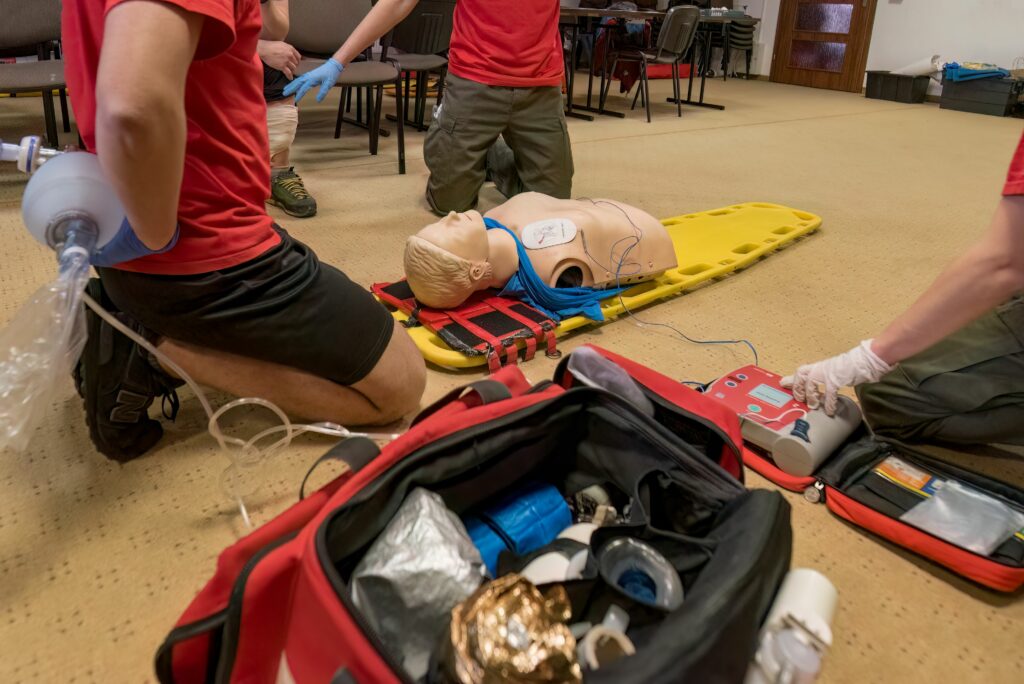
Quality matters. Pressing on the breast is insufficient. A strong cpr training program drills these basics up until they really feel automatic:
- Hand placement at the facility of the chest, in between the nipples, arms locked, shoulders stacked over hands. Depth of 5 to 6 centimeters for adults, allowing complete recoil in between compressions. Rate of 100 to 120 compressions per minute, with very little interruptions. Early use a computerized external defibrillator when available, following the triggers without overthinking them. A solid onlooker system: a single person compresses, one handles the aed and phone, one regulates the scene.
A quick story cements the factor. In a stockroom in Newcastle, a forklift driver collapsed near the packing bay. Two workers had actually simply ended up a first aid and cpr course the week in the past. One began compressions while the other ordered the aed installed near the moment clock. The aed suggested a shock. They complied with the prompts, turned every two minutes to avoid tiredness, and had return of pulse prior to the ambulance pulled in. The paramedic later told me the chain of survival was book. The difference was not luck, it was muscle memory developed throughout practice.
Why employers should possess this
Safety commitments are not just lawful checkboxes. They are social dedications. Buying first aid courses and cpr courses signifies a sensible top priority: we look after each various other here. Beyond values, the business case is clear.
Lost-time occurrences from clinical emergencies expand past the person influenced. Not really prepared teams ice up much longer, spirits dips, and the after-action spiral begins. Where there is routine first aid training, the very same event becomes a drill carried out under stress, with clear duties and quick handover. Insurance coverage carriers and regulators observe the difference. Some jurisdictions and industries mandate a minimal number of certified very first aiders per shift or per head count. Even where it is not mandated, auditors and customers regularly ask for evidence of a first aid certificate coverage plan during prequalification.
From a risk supervisor's seat, I think in direct exposures and mitigations. You can not eliminate the risk of a cardiac event amongst a workforce that mirrors the basic population. You can, nonetheless, minimize effect intensity with a qualified feedback, obtainable aeds, and an easy plan practiced a minimum of annually.
The composition of an efficient course
Not all cpr training is equal. A strong program equilibriums evidence-based web content, practical method, and crisp evaluation. When evaluating a company, whether a national body or a regional first aid pro you have collaborated with previously, I seek several top qualities in the very first session and follow-up.
First, educational program that straightens with current agreement standards. Requirements evolve, and your training course ought to mirror updates on compression-first techniques, the function of rescue breaths in various situations, and the most up to date suggestions on opioid overdose response with naloxone when it is part of your danger profile.
Second, hands-on time. A lecture-heavy cpr course produces note takers, not -responders. Quality programs put manikins on the flooring, aeds in hands, and give each participant numerous cycles of compressions with responses gadgets that measure depth and rate. When a trainee's arms shake after two mins, that is a lesson you can not get from a slide deck.
Third, practical context. Offices, factories, retail floors, and building sites existing different barriers. A great instructor adapts situations. How do you execute cpr on a colleague wedged between racking? How do you clear room in a congested front office? How do you direct emergency services through a safe and secure entrance at night? Modification transforms abstract assistance right into your group's plan.
Finally, an evaluation that means something. A trustworthy first aid and cpr course does not give out a first aid certificate for attendance alone. It validates skills with a brief composed part and a functional analysis. A lot of adults pass, yet they should make it.
Beyond CPR: the full first aid picture
Cardiac arrest grabs headings, yet a lot of workplace occurrences fall into other groups: bleeding, fractures, burns, allergic reactions, diabetic emergency situations, warm illness, fainting, and seizures. A wide first aid course complete the ability. When I advise companies, I choose a modular approach. Core cpr and aed for all staff, prolonged first aid training for assigned responders, and circumstance drills that rotate through likely events on your site.
Control of major blood loss issues in settings with equipment, sharp devices, or vehicle website traffic. Tourniquet usage is a skill ideal found out with hands on practice and a clear understanding of when it is suitable. A work environment that supplies tourniquets yet never trains on them is kidding itself.
Allergy administration is an additional void. If your labor force or consumer base includes people with serious allergic reactions, be sure initial aiders are trained to acknowledge anaphylaxis and utilize an epinephrine auto-injector. Numerous events I have actually checked out began as a "moderate breakout" and rose due to the fact that no one recognized when to act.
Heat anxiety and dehydration appear in warehouses without environment control and on construction sites in summer. A brief seasonal refresher course that covers recognition, hydration methods, and very early cooling approaches avoids hospital runs in January across the Southern Hemisphere or July in the North one.
Certification, refresher course cycles, and keeping abilities sharp
Skills discolor. That is not a personality problem, it is human. If you want your group to perform under stress, plan for it. Most first aid certificates and cpr certifications carry a legitimacy duration of one to three years depending on regulator and service provider. Experience reveals me that the half-life of recall for infrequent responders is closer to six to nine months.
Schedule a cpr correspondence course yearly for assigned -responders, even if official recertification schedules every 2 or 3 years. Shorter touchpoints reinforce core steps, update adjustments, and let personnel run a circumstance or 2. If spending plan is tight, a blended design works well. Online prework for knowledge, followed by a concentrated in-person session for hands on technique. The trick corresponds exposure.
Track qualifications the same way you track forklift licenses or restricted area licenses. A basic lineup with names, roles, program type, day accredited, and expiry maintains you on top of insurance coverage. If your operation runs multiple changes, map first aid and cpr insurance coverage by hour of day. It does not assist to have 5 certifications on the day change and none at night.
Integrating AEDs with human skills
An automated external defibrillator is the most flexible piece of life saving equipment you can get. It talks with the individual, examines the rhythm, and just suggests a shock if indicated. Yet aed programs fall short quietly if batteries die, pads run out, or units are secured a cupboard nobody can open.
Place aeds where people are, not simply where it seems tidy. High website traffic locations conserve secs. Near reception, break rooms, the major stairwell, the loading bay. Go for a 90 2nd stroll each means at an unobstructed pace. In sprawling facilities, that indicates numerous devices. Article clear signage at eye level, and include aed places on your floor plans and emergency situation procedures.
Make checks routine. Appoint weekly aesthetic inspections and month-to-month power tests, and log them. During a cpr training session, let individuals open up the aed, connect pads to a manikin, and listen to the prompts. Self-confidence cuts doubt. When the genuine event shows up, you want Additional resources a person to say I recognize exactly just how this set jobs, not Where is the power button?
Culture consumes policy
Policies do not start compressions. People do. Society informs an employee whether to step in or step back. Leaders set the tone when they participate in first aid and cpr courses together with their groups, ask good concerns, and praise those who take part. I have seen firms give out tiny acknowledgment pins or gift cards to personnel that complete a course or use their training in a genuine occasion. It is easy, yet it matters.
Language selection additionally shapes culture. Avoid dissuading phrases like Only trained -responders must help, which can freeze a ready bystander in the vital first secs. Better wording claims Beginning cpr if someone is unresponsive and not breathing generally, and call for a first aider and the aed immediately. Empowerment within a clear framework defeats passive deference.
Small routines enhance preparedness. A two min security minute at the beginning of a month-to-month meeting, a quick show and inform of a first aid package or aed, a recap of a lesson gained from a recent drill. These touches maintain understanding near the surface.
Designing the right program for your setting
Workplaces are not identical, and neither ought to your method be. Here is a portable planning frame I use when scoping first aid and cpr courses throughout industries.
- Map your threat profile. Workplace, storehouse, laboratory, workshop, retail floor, or field job carry different event patterns. Testimonial your last 2 years of incident records and near misses out on for clues. Define protection objectives. Determine how many first aiders you want per shift, per flooring, or per headcount. Think about visitors and service providers, not simply employees. Choose degrees of training. A baseline cpr course for all may aspire but repays, while a more advanced first aid training track fits assigned responders. Confirm which first aid and cpr courses fulfill governing needs in your jurisdiction. Schedule and phase. Run initial courses in waves to preserve operations, then build a calendar for cpr refresher courses and certificate revivals. Mix finding out where it makes sense. Equip and rehearse. Stock first aid sets for your hazard level, place aeds tactically, and run sensible drills that cross-check your plan versus reality.
The untidy center: compromise and edge cases
Real offices seldom match the clean lines of a training space. Numerous obstacles surface often.
Shift job and turn over stretch programs. Graveyard shift really feel failed to remember if all sessions run in between 8 and 5. Turn your training course times and include brand-new hires early in their induction. Keep a book of added first aid and cpr experienced people to buffer attrition.
Remote or single employees make complex the chain of survival. In those setups, focus on prevention, clear communication plans, and gearing up automobiles with first aid sets and, where practical, aeds. Urge wearable clinical sharp tools for team members with recognized conditions, and make certain supervisors know just how to review and act upon them.
Language barriers slow action. If your team consists of several languages, select a company comfortable with multilingual delivery or offer interpreters for essential principles. Use pictogram-rich signs for aed locations and first aid procedures.
Physical ability varies. Not everyone can kneel and press for two mins directly, which is fine. Expand your team of responders. Somebody with wheelchair limitations can still run the aed, straight emergency situation services to the scene, or clear bystanders.
Legal problems turn up in first aid supervisor meetings greater than they should. Most territories extend Do-gooder protections to lay rescuers who act in excellent confidence within their training. Confirm your regional regulations, include the subject in your plan, and communicate it. Fear of liability should not stop a coworker from starting cpr while a human being's heart is silent.

Selecting a provider you can trust
Credentials issue, however so does fit. When assessing first aid courses and cpr courses from various companies, I interview the instructor that will be on site. I inquire about their area experience, not simply their training hours. Have they functioned a heart attack outside the classroom? Exactly how do they adjust situations for a loud production location or a confined web server room? Do they provide post course support, such as refresher video clips, quick recommendation cards, or an available consultation after a genuine incident?
Logistics become part of the choice. Some providers supply flexible on website distribution during off hours or split sessions that minimize disruption. Others run public courses at central locations that match smaller sized companies sending out 1 or 2 individuals at a time. Price per head must be transparent, without any surprise fees for certificates or rescheduling. Good providers release their training course outlines, finding out goals, and certification validity durations upfront.
I additionally watch how they handle responses. After a pilot session, I welcome blunt comments from participants, after that share them with the service provider. Responsive teachers readjust pace, instances, and focus. Unresponsive ones recite a script. Choose the former.
After the certificate: installing the habit
Finishing a first aid and cpr course is a start, not an endpoint. To install the practice, integrate response duties into your emergency situation plan. Blog post names and pictures of initial aiders on notification boards, and keep an electronic listing available on the intranet or messaging application. Supply first aid sets where people can discover them, not secured a manager's office. Assign a person to check products monthly, and use meddle tags so you know when a package has been opened.
Run 2 short drills a year. They do not need to be sophisticated. One can be a head and shoulders scenario in a meeting room to evaluate communication and aed retrieval time. An additional can run in the storehouse to practice relocating a casualty to a more secure area prior to beginning cpr. Time the steps. People take drills seriously when they understand the stop-watch is running, and you can gauge enhancement across quarters.

Collect after activity notes when actual incidents take place. What functioned, what reduced us down, what do we need to transform? Feed those understandings back into your training strategy. Continuous improvement is not a slogan, it is a simple loophole: strategy, do, evaluate, adjust.
Stories that stay with you
A sales office in a suburban strip had a solitary aed and a team that had finished a cpr training program six months prior. On a winter afternoon, a client in function broke down without warning. The receptionist called out. The office supervisor got the aed, and two staffers started compressions. The customer walked out of the healthcare facility two days later on. Every person because story bore in mind just how unusual it really felt to stoop on the carpet, how loud the aed's voice appeared, and how quick the paramedics relocated as soon as they arrived. They additionally remembered the smile when the client returned a week later on to say thank you. If you desire a tangible return on investment, there it is.
Another case from a manufacture store highlights the breadth of first aid. An employee caught a lower arm on a sharp edge and opened up a long, deep laceration. A marked very first aider applied a pressure dressing that bled through. She added a 2nd and boosted the limb. When hemorrhaging continued, she used a tourniquet three fingers over the injury, noted the moment, and kept the worker calm up until paramedics got here. Training meant the distinction in between a regulated transfer and a preventable crisis.
The peaceful confidence that training brings
You can not predict when a colleague, a customer, or a stranger walking through your entrance hall will certainly need help. You can determine just how your team will certainly react when it takes place. A well chosen, well supplied first aid and cpr course constructs quiet confidence. It removes the haze that descends in a crisis and replaces it with an easy collection of steps, practiced usually enough to feel familiar.
If you lead a group, do the unglamorous work now. Map your threats. Pick a supplier with compound. Set up the sessions. Acquire and place the aeds. Set tips for a cpr correspondence course before certifications run out. Commemorate those that appear. Run the drills. CPR training Albany This is not made complex. It is simply easy to postpone up until the day you wish you had not.
Workdays should finish as they began, with individuals heading home under their own power. That is the factor of training. It is not about certificates on a wall, though you will need those. It has to do with the individual whose heart sputters and quits while the remainder of the office keeps breathing. It is about the coworker that looks across the area, squares their shoulders, and says, I have actually got this. After that they kneel, position their hands, and start.